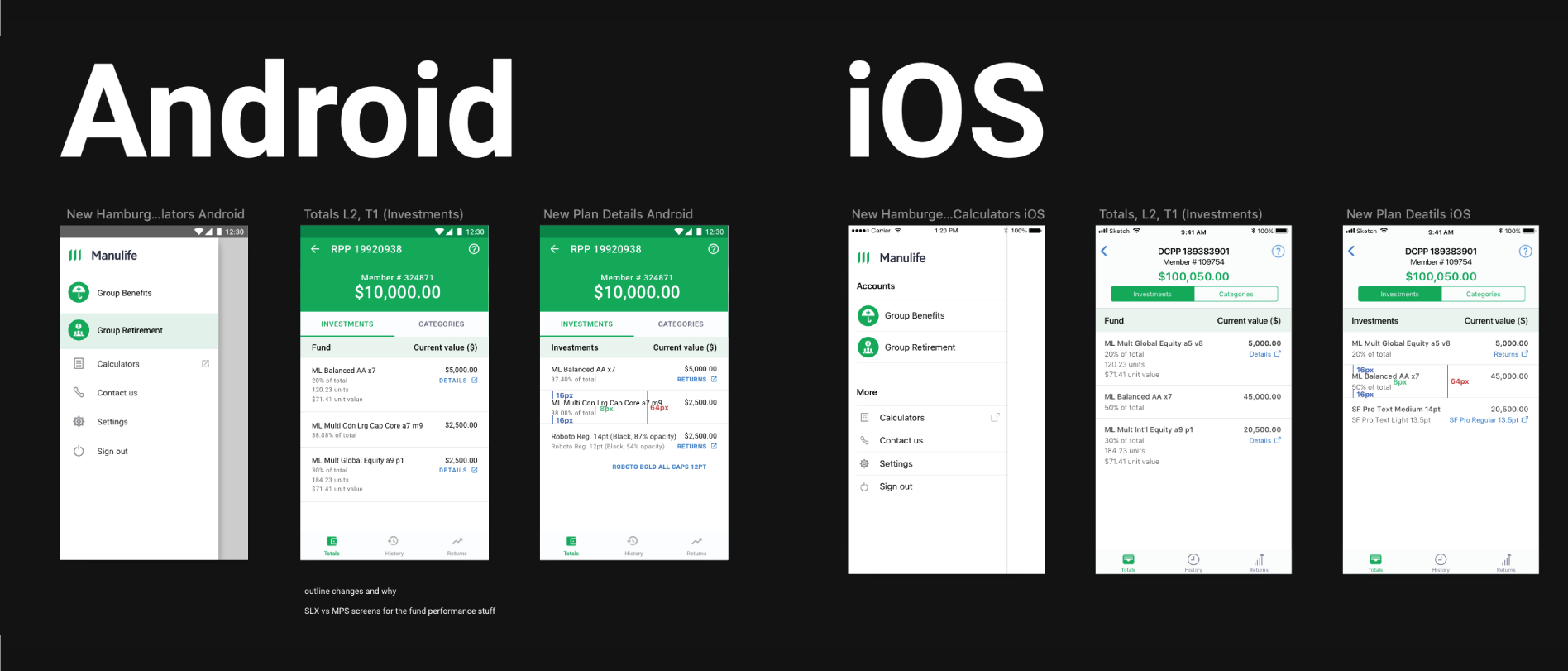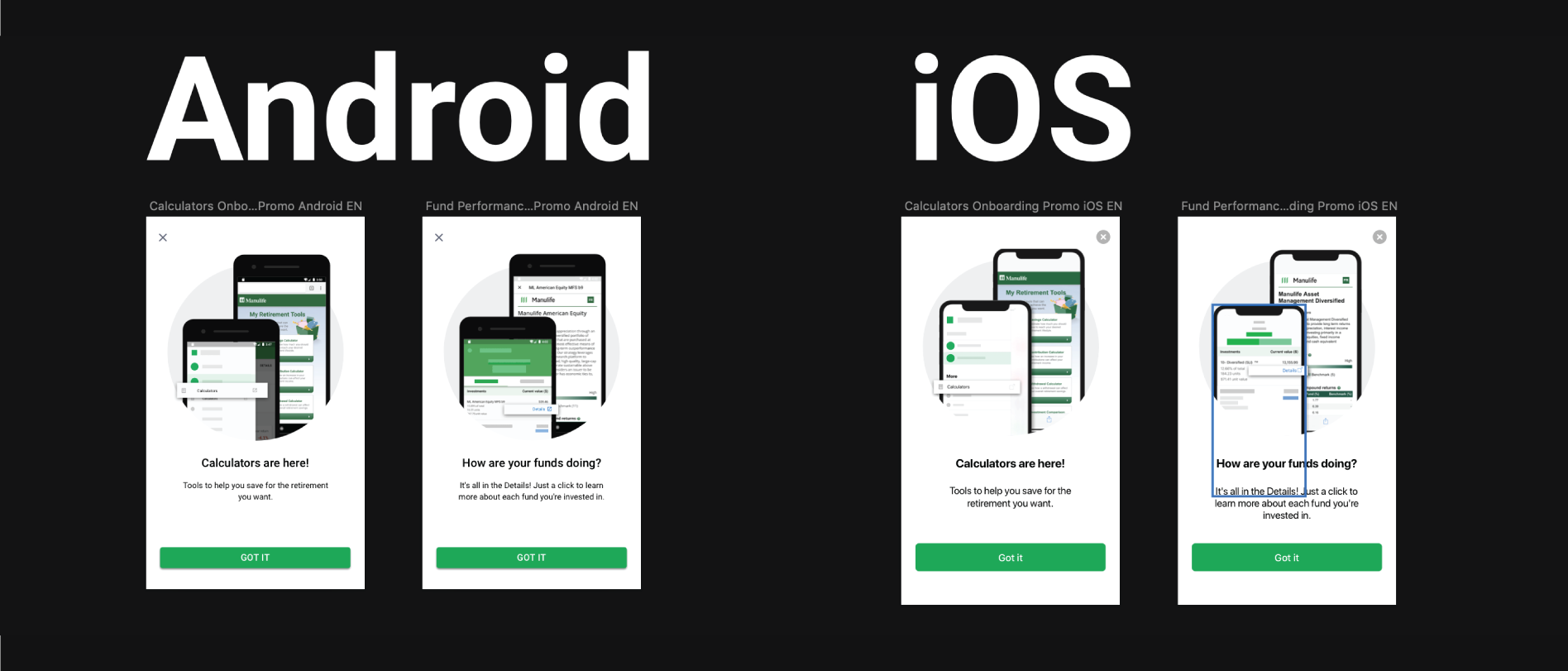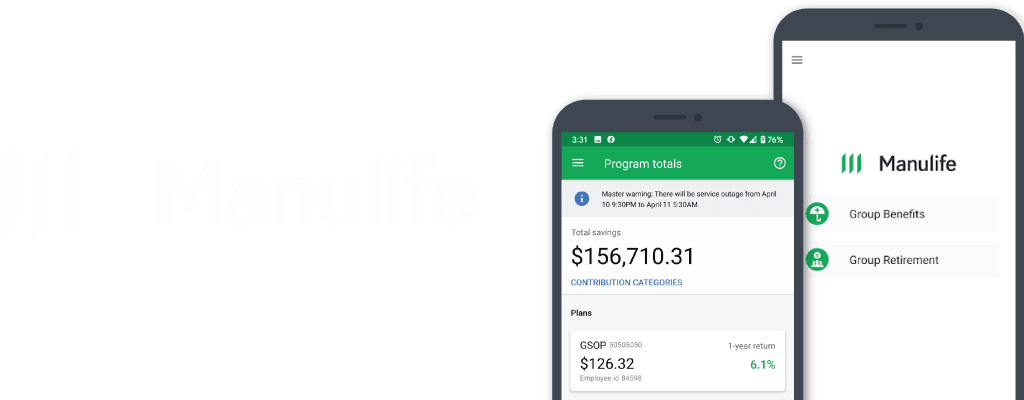
At Manulife, I worked as a Mobile UI/UX designer on a young design team of just four designers, including myself. The team had a UI/UX lead and three designers, each dedicated to a different project. My design team was my resource for brainstorming, design feedback, and the first patterns in our design system. As the sole UI/UX designer on Manulife Mobile Group Retirement, I worked with my project team to set priorities, gather requirements, check what could be built, and deliver native iOS and Android mockups. During my stay, some of the challenges I had to tackle were:
- Reinstating UX practices on my project team
- Making user-centered design matter to my project team
- Finding out why over just accepting asks
- Establishing patterns for remote usability testing
- Sample works
Reinstating UX practices on my project team
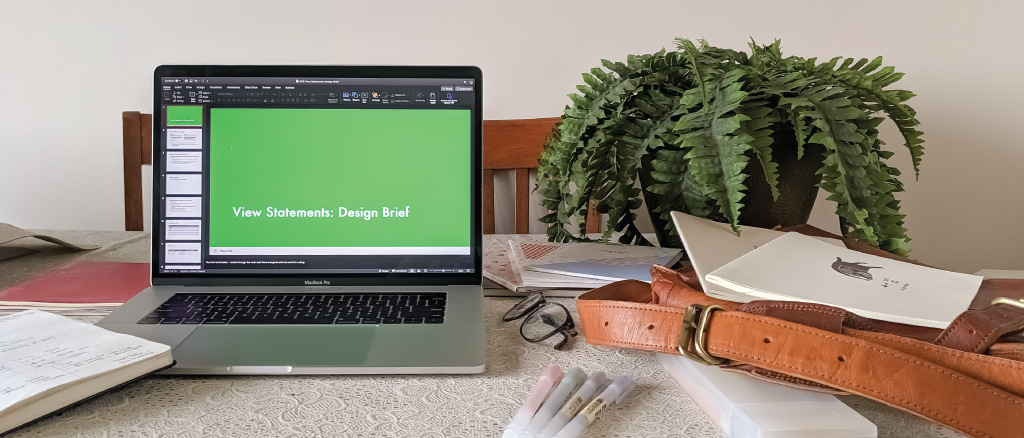
Although this was a co-op position, I was filling a full-time role. For reasons outside their control, the team didn't have a UI/UX designer for a while before I joined Manulife. As the sole designer for my team, it was up to me to explore the problem, brainstorm flows, create wireframes, and keep the user front and center at every stage.
Advocating for the user through research and design
As a designer, developer, and business student, I was able to work with everyone on my project team and empathize with their stance while still vying for the user experience. My mixed background helped me explain design choices and gather needs in ways that fit the audience in the room.
Responsibilities
- Establishing feature priorities with the product owner
- Mapping out requirements with the business analyst
- Creating design briefs with extensive research
- Designing and checking build details with developers
- Evaluating success by studying the metrics
Making user-centered design matter to my project team
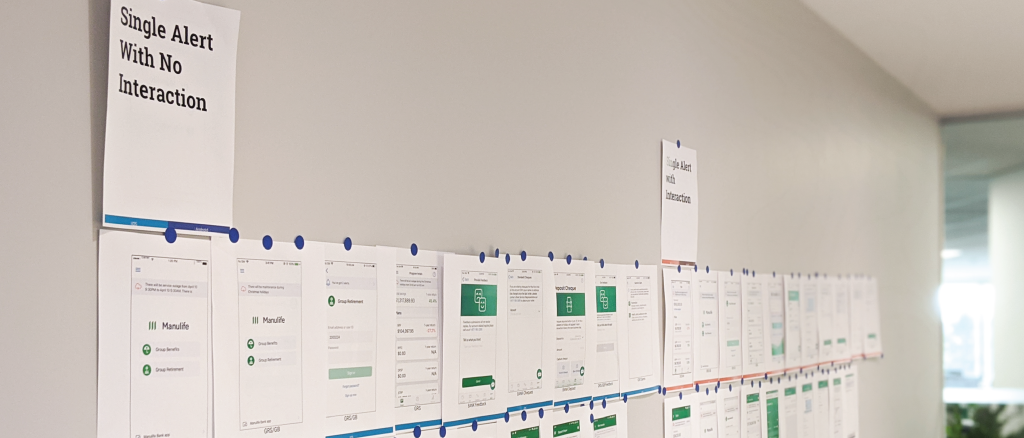
All too often, as designers we sit down, open up our design tool, put our heads down, and look up once we have a finished design to pass along to developers. This limits the potential of the design. It also ignores developers who can provide unique ideas and solutions if given the opportunity to share them.
Using the design brief to align the team on a goal
One of the first things I did was establish a short weekly meeting with all my teammates called a 'Design Check-in.' I would bring my design briefs to this meeting, sometimes without calling them that. Then I used the time to establish the goals, principles, and success metrics for the feature being worked on. Through this meeting, I tried to foster an environment where everyone could share their opinion on the experience and contribute from their own point of view.
Outcomes
- By highlighting the importance of design, the project team had direct input in my design, bringing us closer to finding a solution that suited the project's needs
- Developers became engaged and collaborated on designs
- Production questions were specific and led to a better final product
Finding out why over just accepting asks
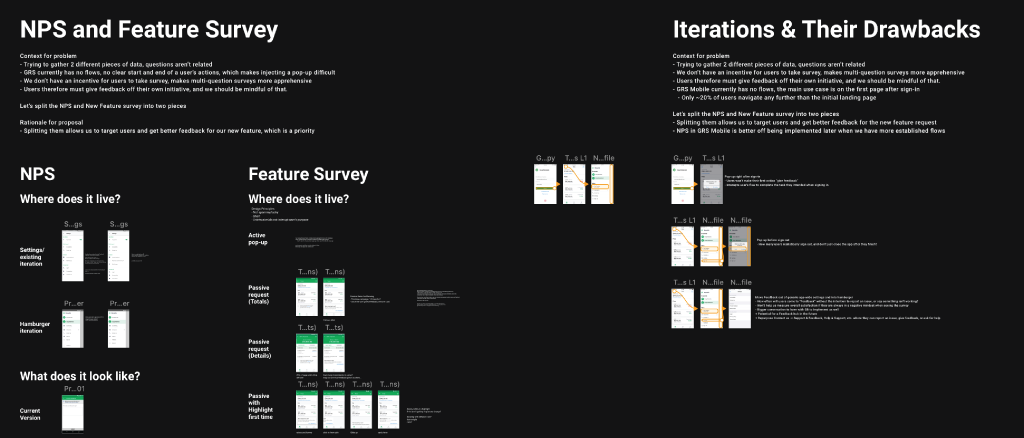
Being in a big company gave me access to plenty of resources, people, and tools to make the best design possible. It also came with requirements from other teams. One of those teams collected and processed user feedback, and one of their go-to tools was Net Promoter Score (NPS). At Manulife, NPS measures customer sentiment at the end of a flow. Manulife Mobile was more informative than interactive at the time, and our team had been mandated to collect NPS in the app. As a UX designer, I had to ask: "What problem is this really trying to solve?"
Know the problem, don't jump to solutions
There wasn't a flow in our app where the generic NPS solution fit without hurting the user experience. By talking with the NPS owners, I found out that the team wanted to validate the product's development direction. Knowing this, I proposed a lighter user survey. It gave users a say in the future of our app, and made them WANT to fill it out rather than forcing it in front of them.
Outcomes
- Maintained good user experience while still meeting the business needs
- Started conversations about alternatives to NPS for collecting feedback on features
- Empowered and motivated my team to challenge blanket business solutions moving forward
Establishing patterns for remote usability testing
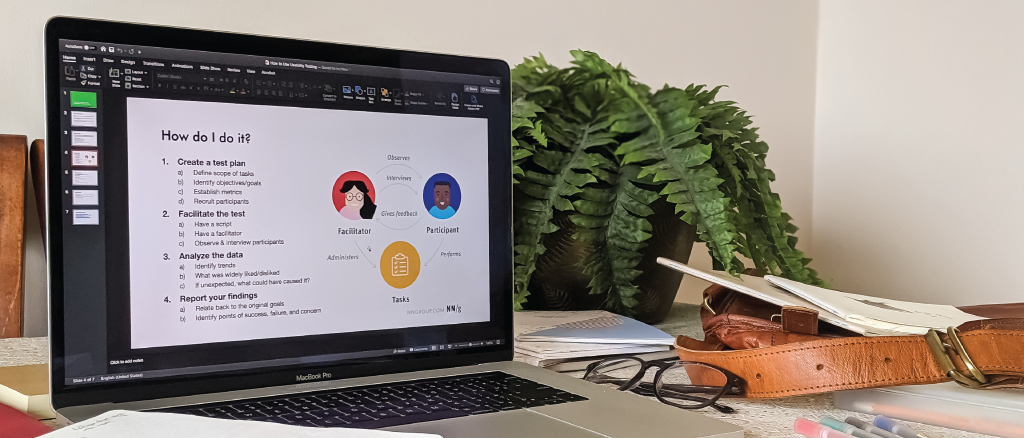
After finishing my co-op term with the Manulife Mobile Group Retirement squad, I returned for the following semester part-time. My new project was to run usability testing from start to finish, then document the process for smaller squads without dedicated UI/UX team members. Our goal was to show the value of getting first-hand feedback from users and help other squads start designing around users. Then Covid-19 pushed the team into remote work. I had to figure out what usability feedback sessions looked like without face-to-face sessions.
Highlight the value without getting caught in the process
I built the guide to show why direct user feedback matters in the design and build process. My target audience would not always be familiar with UX. I wanted usability feedback to feel exciting and motivating for teams, rather than another checkbox to tick off. By using no-cost tools, like Microsoft Teams screen-share on desktop and mobile, I was able to run useful sessions in a remote environment. The guide also gave others an easy way to do the same.
Outcomes
- Created usability testing guide for other teams to use
- Made a framework for tying product/project goals to test criteria
- Explored new ways to host remote usability testing without introducing additional costs
- Provided insights to help give the design team direction for the future
Sample works